2026-10-24 · David Morales
Soil Movement and Slab Leak Risks Around Brea
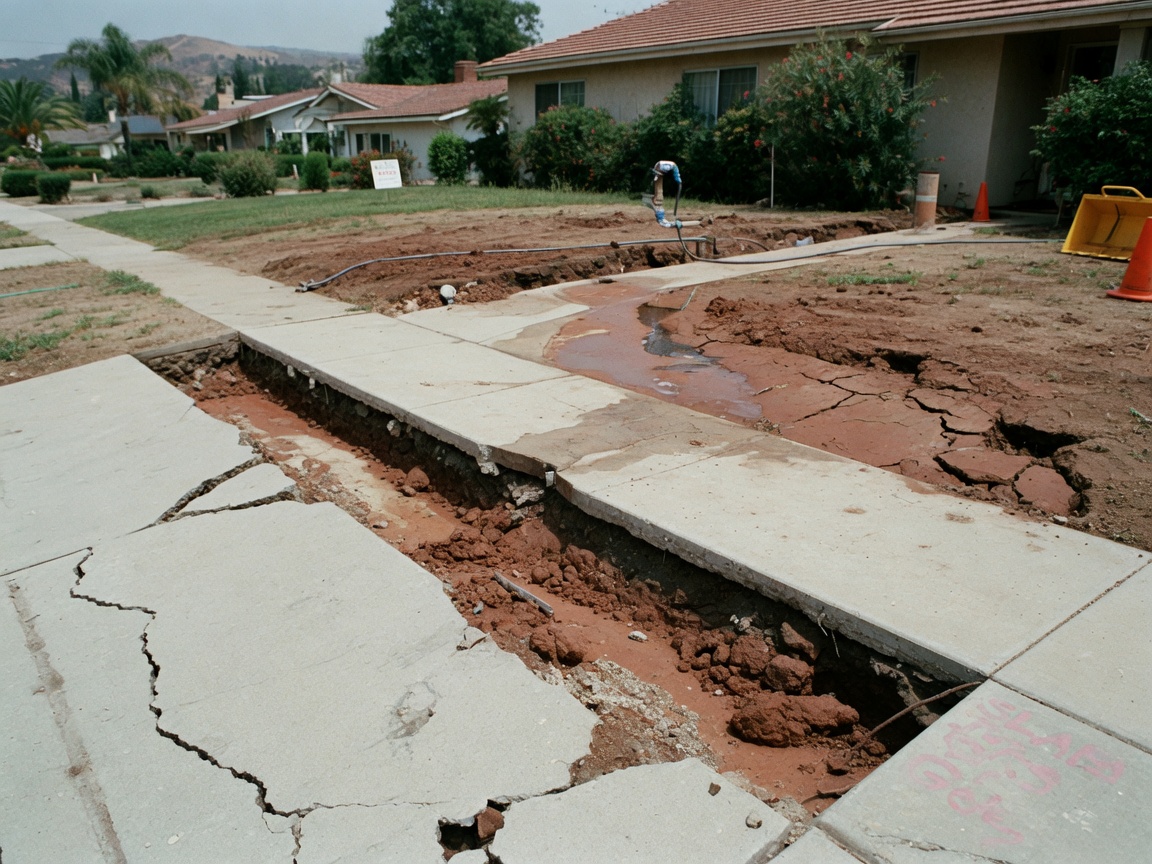
Brea's clay-rich soils expand and contract with moisture swings, directly increasing slab leak risks in homes built on slabs throughout Orange County neighborhoods like Downtown Brea and Country Hills.
Soil Types and Movement Patterns in Brea
Brea sits on expansive clay soils common across northern Orange County that absorb water during mild winters then shrink in the hot dry summers. This cycle creates differential movement under concrete slabs, cracking pipes at joints or where they enter the foundation. Homes in Brea Olinda and near Brea Creek often sit on deeper clay layers that hold moisture longer after rains, amplifying stress on older galvanized or copper lines. The terrain slopes gently toward Carbon Canyon Regional Park, so runoff concentrates in low spots and saturates soil unevenly around slabs. Properties near Brea Mall experience similar issues when irrigation from commercial landscaping adds extra moisture on one side of the foundation.
Climate Effects on Foundations
Brea's Mediterranean climate drives the soil cycle with hot dry summers that pull moisture from clay and mild winters that deliver concentrated rains. Once winter temperatures drop and rains arrive, saturated clay swells and lifts slab edges, while summer heat causes the opposite contraction that shears pipes. This pattern repeats yearly and accelerates wear on water lines under slabs in areas like Country Hills. How Winter Rains Trigger Slab Leaks in Brea Homes explains the seasonal timing in more detail. Homes built before the 1980s in Brea Olinda show more movement damage because their slabs lack modern reinforcement.
Neighborhood-Specific Risks
Downtown Brea features many mid-century homes on shallow slabs over variable fill soil that settles unevenly near Brea Sports Park. Country Hills homes sit closer to hillside drainage paths where seasonal runoff concentrates and saturates clay faster. Country Hills properties often require deeper excavation when leaks occur because mature tree roots from nearby landscaping pull additional moisture from the soil. Nearby Fullerton and Placentia share the same soil profile, so the same movement patterns appear across city lines. Brea Creek areas face extra risk when winter flows raise the local water table and keep clay saturated longer into spring.
Early Detection Steps
Homeowners notice higher bills or warm spots on floors first when movement has already stressed pipes. Checking the meter for continuous flow during a two-hour shutoff period reveals hidden leaks before major damage spreads. Slab Leak Detection uses acoustic and pressure methods suited to Brea's soil conditions without unnecessary demolition. Foundation Leak Repair addresses the pipe and any resulting settlement in one visit. Regular meter checks in spring after winter rains catch issues while repairs stay smaller.
Practical Prevention in Local Homes
Keep irrigation lines at least three feet from slab edges to limit extra moisture that worsens clay expansion. Grade soil around the foundation to drain away from the house, especially in Country Hills where slopes direct water toward slabs. Monitor trees near Brea Olinda properties because root systems dry soil on one side and create uneven movement. These steps reduce but do not eliminate the annual stress Brea's climate places on slab plumbing.