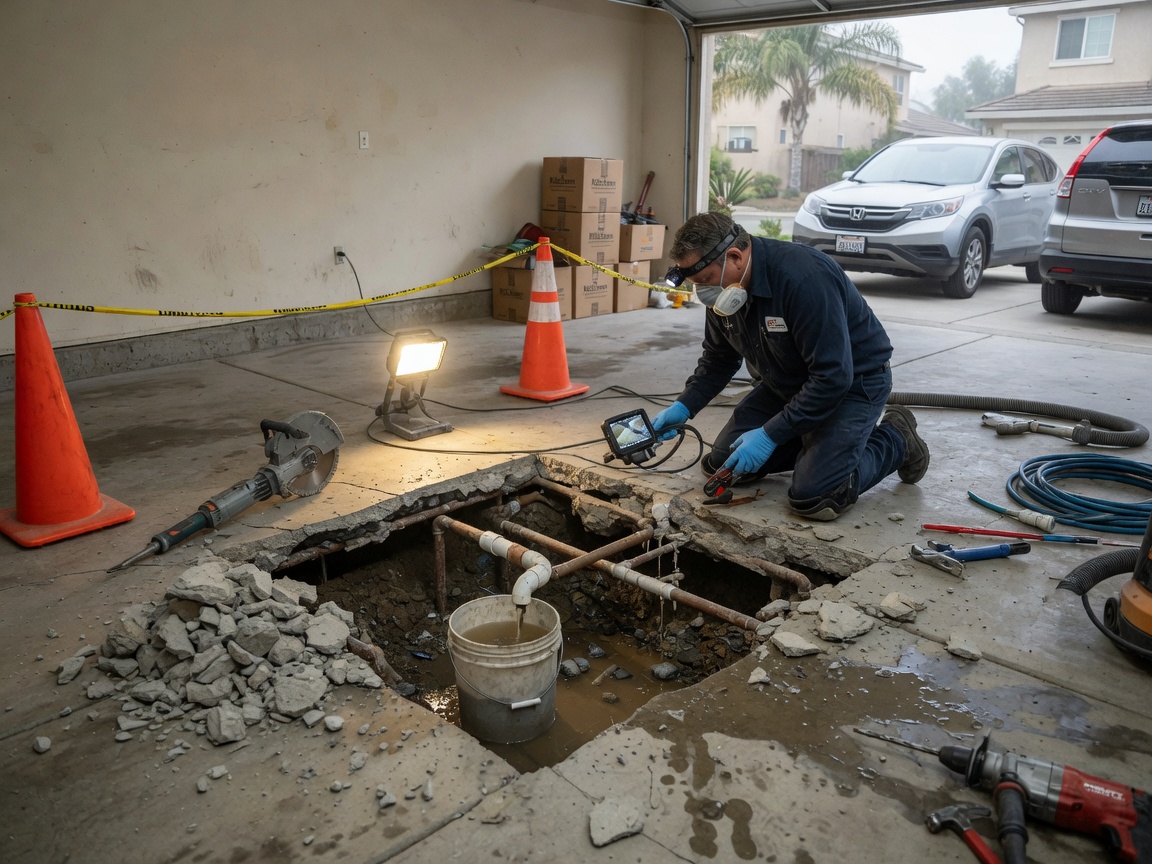
Eagle Hills homes sit on concrete slabs mostly poured in the 1970s and 1980s, where shifting clay soils and tree roots from yards along Eagle Hills Drive commonly push copper lines. Brea Slab Leak Pros reaches these streets quickly from our base at 439 W Lambert Rd Ste F, entering through side yards or garages without tearing up the whole floor. Hot dry summers followed by mild winter rains speed up soil movement here, so leaks often appear first near the front foundation where irrigation meets the slab.
We serve Eagle Hills specifically by routing through the neighborhood's narrow cul-de-sacs and working around mature landscaping that blocks standard equipment access. Our team knows which homes back up to Brea Creek greenbelt and how that extra moisture changes leak patterns. Calls during summer months usually involve urgent detection before the next rain cycle softens the ground again.
Residents in Eagle Hills call us when hot spots show on tile or utility bills spike. We locate the line, isolate the section, and repair without removing cabinets in most tract layouts common to this pocket of Brea.
Around Eagle Hills
We regularly work near:
- 📍Eagle Hills Park
- 📍Eagle Hills Drive
- 📍Fanning Elementary School
- 📍Brea Creek trail access
- 📍Lambert Road at the neighborhood entrance
Slab Leak Repair in Eagle Hills — Local Notes
- •Eagle Hills tract homes from the 1970s-80s use copper supply lines set directly in the slab; seasonal dry spells followed by winter rains cause the clay soil to expand and contract, cracking joints near the perimeter.
- •Lots here back up to slopes or Brea Creek drainage, so water from upslope irrigation often pools against the foundation and accelerates pinhole leaks on the north and east sides of homes.
- •Narrow side-yard access and mature trees near Eagle Hills Park mean we often use smaller detection cameras instead of large jackhammers to keep disruption low for these established properties.
- •Many Eagle Hills slabs sit close to the street, letting us reach the leak point from the front without crossing the entire house footprint.