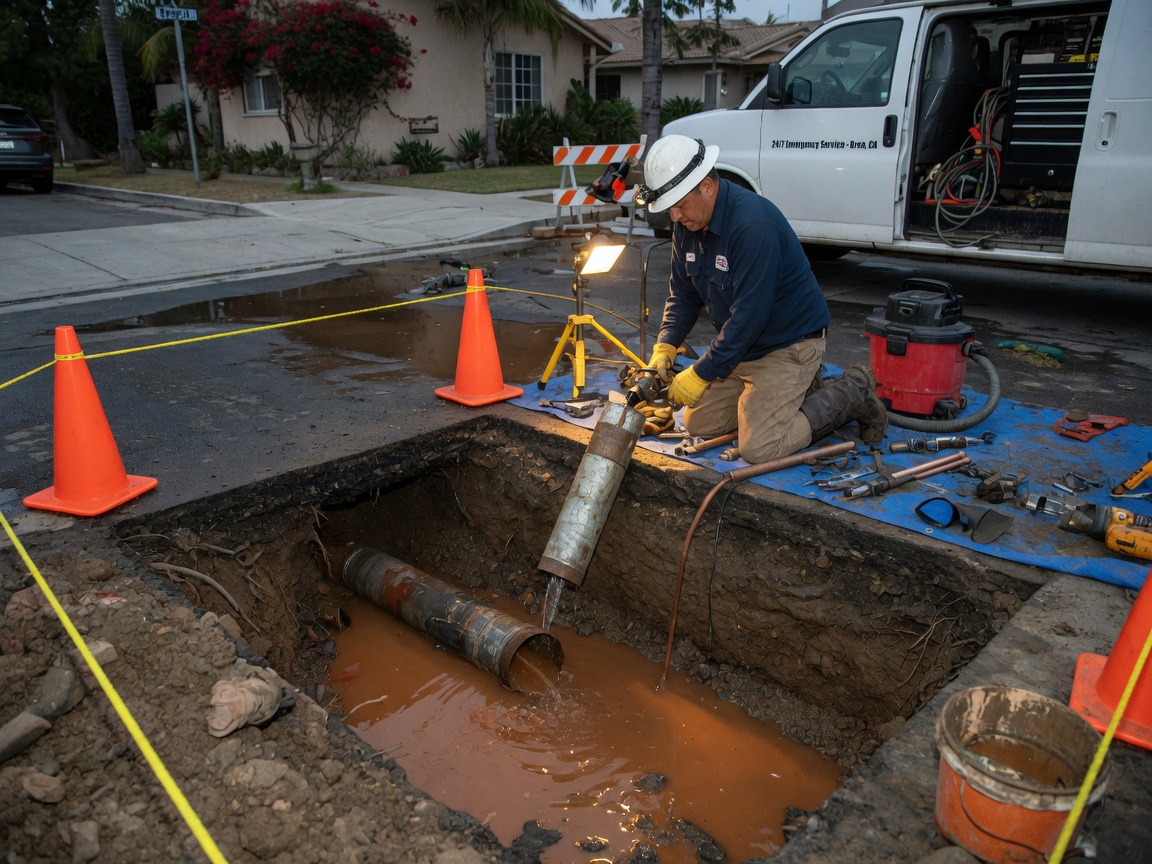
Homeowners in Portarosa often deal with slab leaks because many residences sit on older concrete foundations built when Brea expanded in the 1970s and 1980s. The neighborhood’s mix of single-story ranch homes and two-story tract houses along streets like Valencia and Berry means access can be tight, especially when driveways and mature landscaping block equipment. Brea Slab Leak Pros works from its base at 439 W Lambert Rd and arrives with electronic listening tools and camera inspection gear sized for these lots.
Mild winters and hot dry summers in Orange County push water use higher in summer months, stressing copper and galvanized lines under Portarosa slabs. Soil movement from occasional heavy rains near Brea Creek can shift pipes and create pinhole leaks that go unnoticed until hot spots appear on floors. Our technicians map the exact line runs before any cutting, keeping repairs contained to small access points rather than broad excavation.
Serving Portarosa means knowing which alleys and side streets allow trailer access and which homes back up to the Brea Sports Park perimeter where noise rules apply. We schedule most jobs between 8am and 6pm weekdays so residents can stay on their routines while we isolate and replace the damaged section.
Around Portarosa
We regularly work near:
- 📍Brea Mall
- 📍Brea Sports Park
- 📍Carbon Canyon Regional Park
- 📍Lambert Road
- 📍Brea Creek
Slab Leak Repair in Portarosa — Local Notes
- •Portarosa lots often have narrow side yards and rear slopes toward Brea Creek drainage, so we stage equipment on the street and run long hoses rather than driving across lawns.
- •Many homes here still have original copper supply lines from the 1970s-80s; the combination of alkaline soil and summer heat accelerates corrosion at slab penetrations.
- •Driveways in the Berry Street section sit close to the foundation, forcing us to use smaller jackhammers and hand excavation to avoid cracking concrete approaches.
- •Proximity to Carbon Canyon Regional Park means some Portarosa properties sit on slightly elevated pads where soil moisture changes more dramatically between irrigation cycles and winter rains.