2026-10-24 · David Morales
How Winter Rains Trigger Slab Leaks in Brea Homes
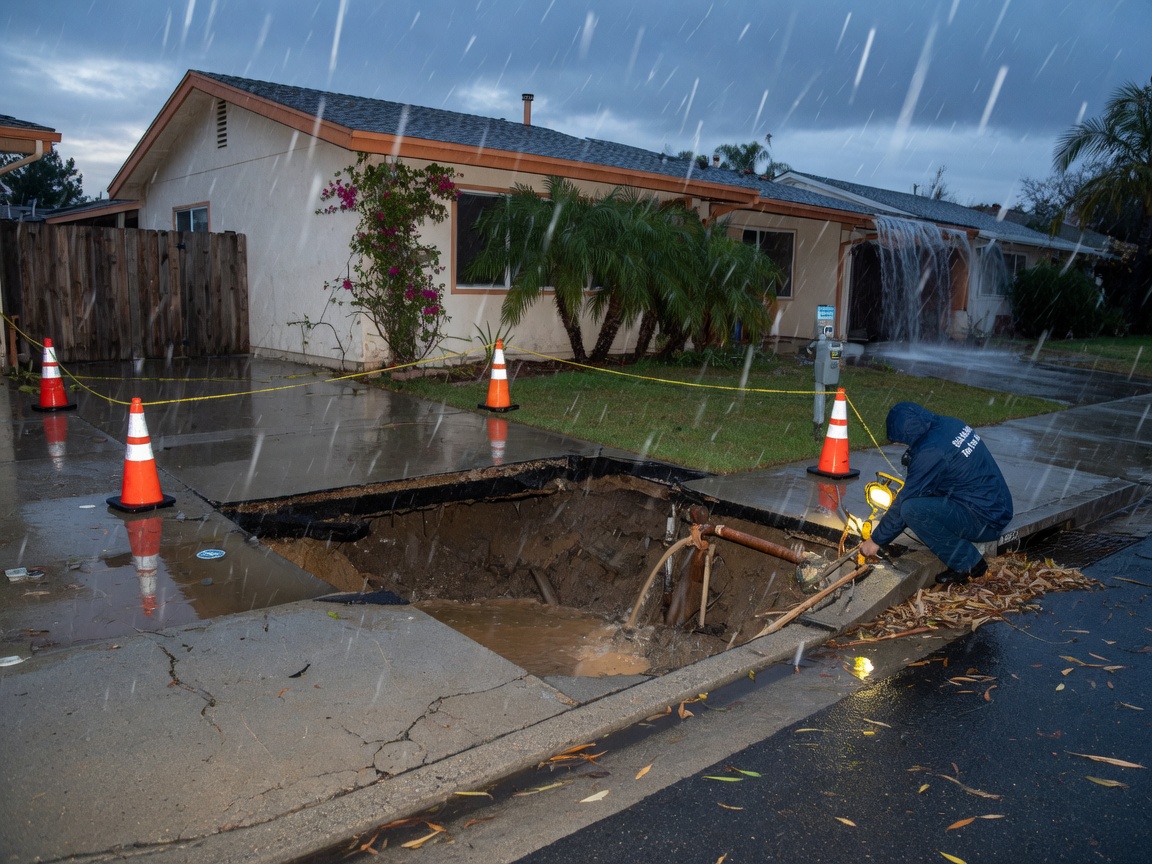
Winter rains trigger slab leaks in Brea homes by saturating clay soils that expand and press against copper and galvanized lines installed decades ago beneath concrete slabs. The pattern repeats each year once the first series of storms arrives in Orange County and the ground stays wet for weeks.
Winter Rainfall Patterns in Brea's Mediterranean Climate
Brea receives most of its annual rain between November and March in concentrated events rather than steady drizzle. When several inches fall over a short period, water pools against foundations in neighborhoods such as Downtown Brea and Brea Olinda. The mild winter temperatures keep the ground from freezing, so the moisture stays liquid and continues to migrate under slabs. Homes near Brea Creek and Country Hills often sit on finer soils that hold water longer, increasing the duration of pressure on buried pipes. This seasonal cycle differs from the hot, dry summers when the same soils shrink and pull away from foundations. The repeated wetting and drying accelerates joint fatigue in older supply lines.
Soil Movement and Pipe Stress in Orange County
Orange County soils around Brea contain high percentages of clay that swell when wet. This expansion exerts lateral and upward force on rigid pipes running beneath slabs. In areas like Brea Olinda and near Carbon Canyon Regional Park, the soil profile varies enough that some lots experience more movement than others. Pipes installed before modern flexible materials became common suffer the most. A single prolonged rain event rarely causes immediate failure, yet successive storms keep the soil at elevated moisture levels and compound stress at elbows and joints. Homeowners who monitor soil movement and slab leak risks around Brea learn to recognize when seasonal conditions have shifted from normal to problematic.
Effects on Homes in Downtown Brea and Country Hills
Many residences in Downtown Brea and Country Hills were built between the 1960s and 1980s with slab-on-grade construction and copper supply lines. These homes sit close to Brea Mall and Brea Sports Park where lot sizes limit drainage options. When winter rains arrive, water that cannot sheet away from the foundation finds paths under the slab edge. Nearby cities such as Fullerton, Placentia and La Habra share similar housing stock and soil conditions, so the same rain-driven mechanism appears across the region. Slab leaks often surface first at laundry rooms or bathrooms where pipes run nearest the perimeter.
Practical Detection Steps During Rainy Months
Residents can compare their water meter reading before and after a two-hour period with all fixtures off. A moving dial indicates flow somewhere in the system. Checking for warm spots on floors or sudden increases in the water bill provides additional clues. When these signs appear, slab leak detection locates the exact point without unnecessary demolition. Early confirmation prevents moisture from reaching subfloor framing or damaging adjacent finishes in homes throughout Brea.
When to Schedule Professional Assessment
Persistent dampness or unexplained humidity after storms warrants a call to a plumber familiar with local conditions. Emergency slab leak repair crews respond quickly when water continues to flow under the slab. Homeowners in Country Hills and Downtown Brea benefit from scheduling checks before the next rain cycle begins. Keeping gutters clear and ensuring downspouts discharge several feet from the foundation reduces the volume of water that reaches the soil directly against the slab.