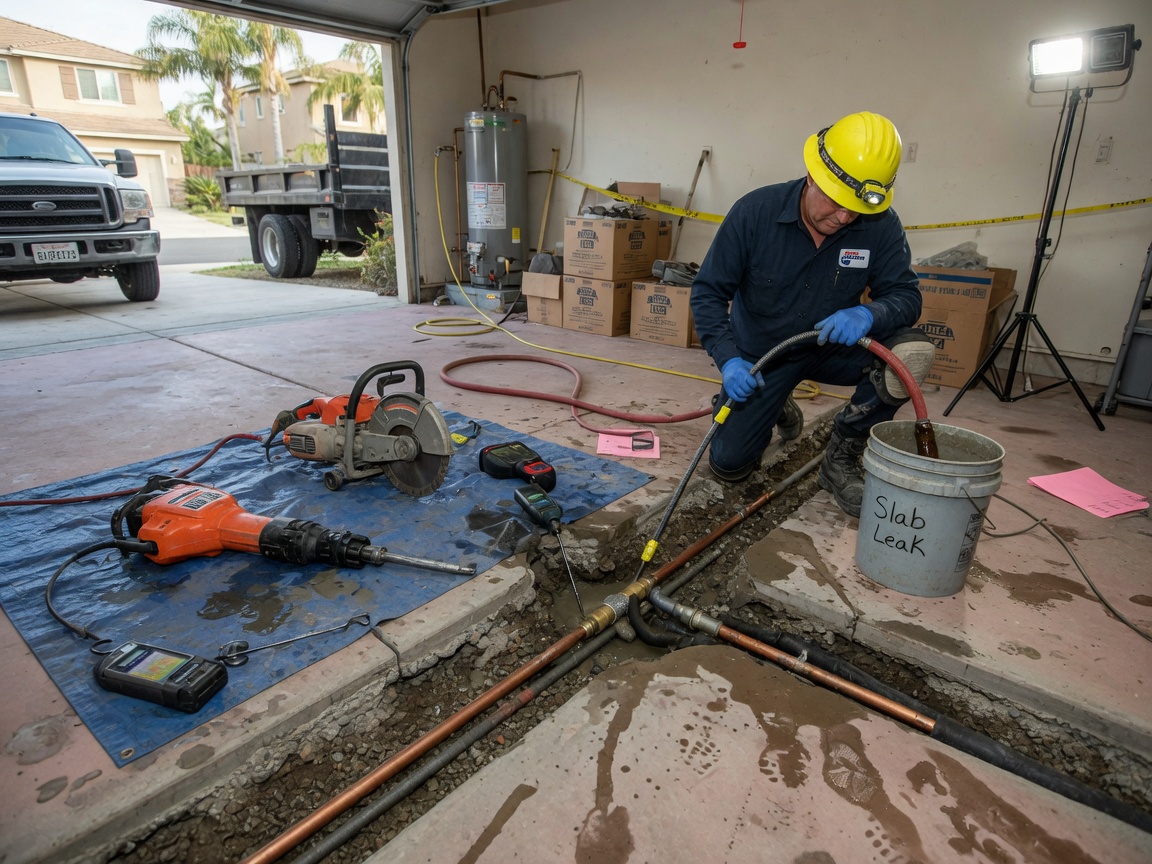
Brea homes built before the 1990s often have copper hot water lines under slabs that corrode faster due to constant heat and the area's Mediterranean climate of hot dry summers. When these lines leak near Brea Mall or Brea Sports Park neighborhoods, water migrates along the slab edge and can reach foundations in Country Hills without obvious interior signs. Technicians must account for soil expansion in mild winters that shifts pipes and complicates access.
Hot water leaks create higher pressure than cold lines, so isolation testing starts at the water heater and moves outward using acoustic and thermal cameras to avoid unnecessary cuts in Brea Olinda or Carbon Canyon Regional Park adjacent properties. Orange County code requires proper backflow prevention during any slab work, and crews verify shutoff valve function before opening the floor. Skipping this step risks scalding or further pipe damage when pressure returns.
Epoxy lining or targeted copper replacement works best once the exact run is mapped, especially in older Downtown Brea stock where original plumbing runs close to driveways. Homeowners in Fullerton and Placentia often delay because the leak stays hidden under carpet or tile until mold appears. Early detection prevents the slab from cracking further when seasonal rains return.
Technician insight
In Brea the thing that catches most people out with hot water slab leak repair is how fast copper lines thin when they run under slabs in pre-1980s homes around Brea Olinda. Hot water plus the clay-heavy soil that expands in our mild winters moves the pipe just enough to create pinholes that stay hidden until the leak reaches the edge of the foundation near Carbon Canyon Regional Park.
Hidden Leak Under Laundry Slab
A Country Hills homeowner noticed warm spots on the garage floor but no standing water. Testing showed the hot line from the water heater had developed a pinhole where it passed under the slab edge. We isolated the run, opened a two-foot section, replaced the copper with PEX transition fittings, and restored the floor without affecting the rest of the home.
Hot Water Slab Leak Repair Services We Offer
✓Hot Water Line Acoustic Detection
Pinpoints active hot water leaks under slabs in Brea homes using sound and temperature tools to limit concrete removal.
✓Water Heater Isolation Testing
Checks pressure from the heater outward to confirm whether the leak is in the slab line or the unit itself.
✓Targeted Slab Excavation Repair
Opens only the necessary section of slab to replace corroded hot water pipe sections in neighborhoods like Country Hills.
✓Epoxy Lining for Hot Water Lines
Applies interior coating to existing pipes when full replacement would disturb finished floors near Brea Creek.
✓Post Repair Pressure Verification
Restores full hot water pressure and monitors for 24 hours to ensure the fix holds in Orange County soil conditions.
Hot Water Slab Leak Repair Cost in Brea, CA
| Service | Typical Range | What Affects It |
|---|---|---|
| Hot Water Slab Leak Detection | $250–$475 | Higher in older Brea Olinda homes with multiple pipe runs. |
| Targeted Excavation And Repair | $1,800–$3,400 | Varies with access under driveways near Brea Sports Park. |
| Epoxy Lining Option | $1,400–$2,600 | Preferred when full replacement would affect finished interiors. |
| Post-Repair Pressure Test | $150–$275 | Included when repair work is performed same day. |
Ranges are typical for Brea, CA and confirmed with an exact written quote before any work starts.
How it works
- 1
Initial Assessment
Arrive at the Brea property and review water heater location plus any history of leaks in the slab.
- 2
Leak Isolation
Shut off hot water supply and run targeted pressure tests to confirm the leak sits under the slab rather than at fixtures.
- 3
Mapping And Access
Use detection equipment to mark the line path and open the smallest practical section of concrete.
- 4
Repair And Restore
Replace or line the damaged section, backfill, and test the system before finishing the floor surface.
Pricing
Cost depends on depth of the line, slab thickness, and whether epoxy lining or full pipe replacement is required.